
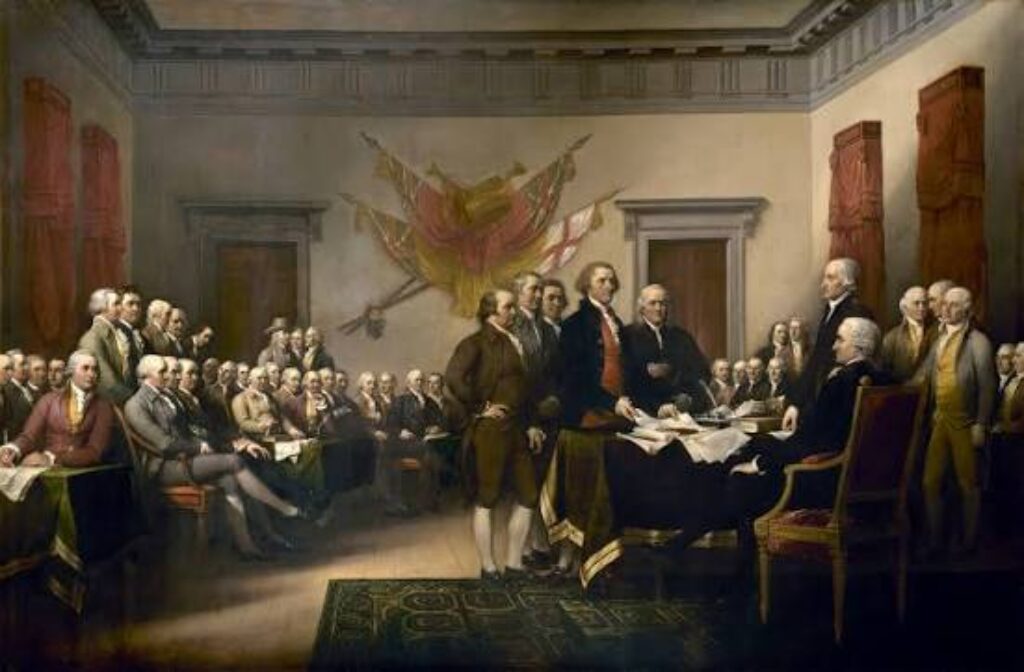
With less than two weeks to go before the anniversary of the Declaration of Independence, we’re in the home stretch of hearing “America was founded as a Christian nation and the Declaration proves it.” The Religious Liberty Commission report is due any day. So, one more time, I’m going to knock that statement down and then I’ll move on;
- The Declaration of Independence was a break-up letter with England, not the establishment of a new country or government. It says the separate colonies are now independent, not that they are a new nation, Christian or otherwise.
- The Declaration primarily includes 27 grievances with England. None of them mention religion or even the powerful Church of England.
- The Declaration mentions “the Creator” and “Nature’s God” which many cite as proof of the Christian nation claim. But that evidence alone is just too flimsy when you read it.
- One year later, in 1777, the states agreed to the Articles of Confederation which set up a government without mentioning Christianity, God, the Bible, and which mentions religion only once briefly in a section on trade. No Christian nation evidence there.
- Twelve years later the Articles were replaced by the Constitution which again did not in any way set up a Christian government for a Christian country. The word ‘religion’ is only mentioned one time when it says there will be no religious test for any public office. The Constitution does not mention God or Christianity. It’s really the opposite of saying, “This will be a Christian nation.”
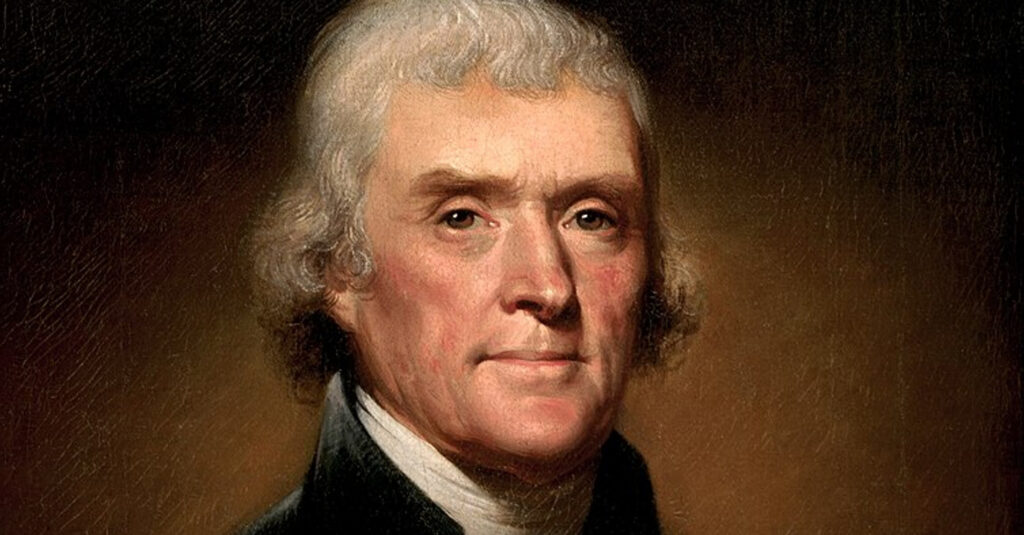
- The pro-Christian nation side points out correctly that the Constitution does not include the phrase “separation of church and state.” It also doesn’t mention AR-15s and a thousand other questions that have come up. So for 250 years people have been inferring what the Constitution and Bill of Rights mean based on the text and on outside information from the Founders. That’s where Jefferson’s “wall of separation between church and state” statement comes in. We infer that 18-year-olds can own AR-15s. We infer that there should be a wall of separation between church and state. (Boosted by the Establishment Clause in the First Amendment: “Congress shall make no law respecting an establishment of religion”.
Finally, how important is this whole argument 250 years later? Yes the nation was founded by Christians who were almost entirely Protestants. There were hardly any Catholics then and even fewer Jews and members of other religions. Today we know that 63 percent of the current population is Christian, six percent other religions, and 28 percent people with no religion. The real question isn’t how we were founded, it’s how religious freedom should be applied to today’s population.
Should tax dollars go to support schools that are mostly Christian? Should churches that get a tax exemption be allowed to support political candidates? Should the Ten Commandments be required to be posted in every public school classroom? Can Christian organizations that receive a federal grant proselytize while helping people in need with that grant money? These are the real-life questions that determine whether America is a nation that respects the rights of people from all religions and no religion at all, or whether it gives preference to Christians based on who is in power now.
We know where Jefferson stood on these issues. Madison said religion and government exist in “greater purity, the less they are mixed together”. John Adams signed the Treaty of Tripoli which explicitly declared that the United States is “not, in any sense, founded on the Christian religion.” I think the Founders would be appalled at where we are on these issues now and they would be on social media explaining that this is far from what they envisioned 250 years ago.